How to Maintain Your Commercial Flooring for Longevity
Most commercial flooring failures don’t happen overnight. They happen because small maintenance issues get ignored until they become expensive ones.
The good news is that extending the life of your commercial flooring doesn’t require a massive budget or a specialized team. It requires consistency. Simple!
Pacific Modular has been helping commercial facilities get more out of their floors for over 30 years. We understand that most flooring problems come down to not having a clear maintenance plan in place from the start.
That’s why this guide covers everything from daily cleaning habits to material-specific care tips so your floors hold up under the demands of real commercial use.
Why Commercial Flooring Maintenance Actually Matters

Your commercial flooring takes a beating every single day. Foot traffic, spills, heavy equipment, and shifting furniture all add up faster than most people realize. Without a consistent commercial flooring maintenance plan, what starts as surface wear turns into cracks, stains, and structural damage that costs significantly more to fix than it would have to prevent.
However, maintaining commercial flooring is necessary for three key reasons:
- Extends its lifespan, so you don’t have to worry about replacement costs.
- Protects your investment by reducing emergency repairs, which can affect your profit margins.
- Keeps your space looking professional. Self-explanatory.
By the way, neglecting it does the opposite. Replacement costs far outpace what routine upkeep requires, and in high-traffic environments, that gap widens quickly.
How to Clean Commercial Floors Properly
Knowing how to clean commercial floors properly starts with having a schedule and sticking to it. Daily sweeping or dust mopping removes the grit and debris that scratches and dulls surfaces over time.
Also, weekly damp mopping with a pH-neutral cleaner handles the buildup that daily cleaning misses. Periodic deep cleaning, done monthly or quarterly depending on traffic, addresses what routine maintenance cannot.
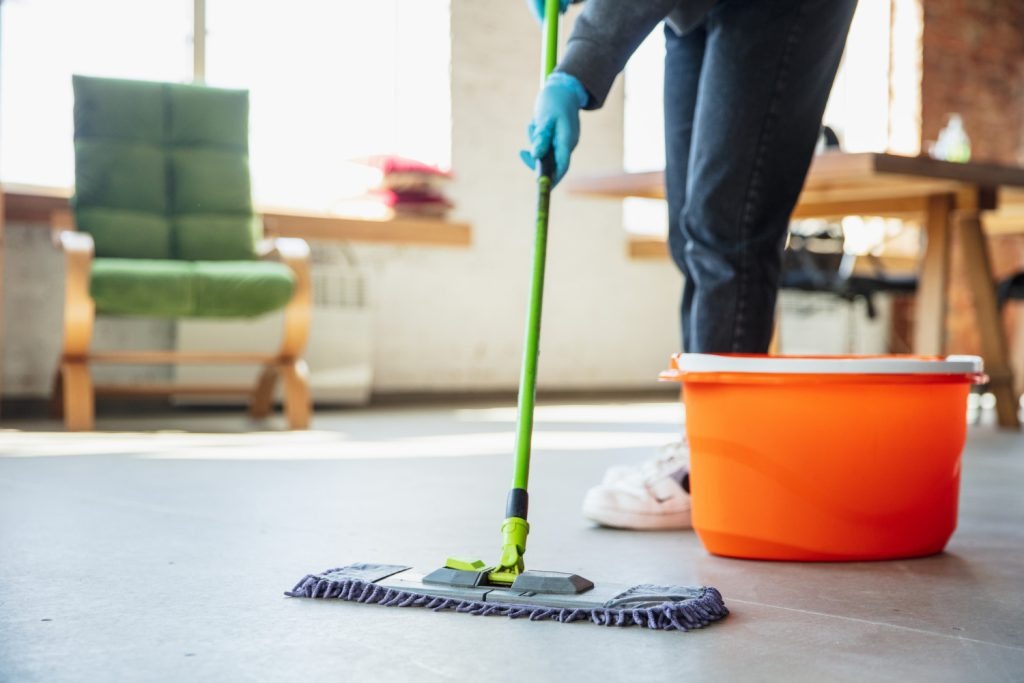
When it comes to commercial flooring cleaning methods, the product matters as much as the frequency. Harsh chemicals strip finishes, weaken adhesives, and accelerate commercial flooring wear and tear. ALWAYS match your cleaner to your floor type.
If you’re unsure where to start, Pacific Modular’s commercial flooring team can help you build a cleaning routine that actually fits your facility.
Material-Specific Commercial Floor Care Tips
At Pacific Modular, we’ve handled different commercial floors over the last 30 years. So, we know exactly how to clean a particular commercial floor (depending on the material). That said, here are a few material-specific commercial floor care tips you can follow:
1. Vinyl Commercial Flooring Maintenance
Vinyl is forgiving, but it’s not indestructible. Stick to pH-neutral cleaners and avoid soaking the surface since excess moisture works its way into seams and causes lifting over time. Reseal periodically based on your traffic volume, and you’ll get significantly more years out of it than facilities that skip that step entirely.
2. Carpet Commercial Flooring Care
Carpet hides dirt well, which is exactly why it gets neglected. Vacuum high-traffic areas daily and the rest of the floor at least three times a week. Treat spots the moment they happen because set-in stains rarely come out fully.
Deep cleaning every six to twelve months keeps fibers from breaking down and extends the life of the carpet considerably.
3. Tile Commercial Floor Maintenance
Here’s the thing, the tile itself is usually fine. The grout is where problems start. Acidic cleaners eat away at grout over time, so avoid them entirely. Reseal grout lines annually in busy areas and address cracks early before moisture gets underneath and creates a much bigger repair.
4. Hardwood Commercial Flooring Care
Moisture is hardwood’s biggest enemy in a commercial setting. Clean up spills immediately, keep humidity levels consistent, and use protective pads under furniture legs. Plan for refinishing cycles every few years, depending on traffic, because catching surface wear early is far cheaper than replacing boards.
5. Concrete Commercial Floor Maintenance
Sealed concrete is easy to maintain. Unsealed concrete is not. Keep the surface sealed, degrease regularly in areas prone to oil or chemical exposure and inspect the coating periodically. Surface damage that gets ignored becomes a safety issue fast.
Protecting Commercial Flooring from Heavy Traffic
Protecting commercial flooring from heavy traffic starts before anyone even walks through the door. Quality entrance mats at every entry point trap dirt, moisture, and debris that would otherwise grind into your floor surface with every step. This single habit reduces surface wear more than most people expect.
Inside the space, furniture pads under legs and bases prevent the scuffing and gouging that accumulates quietly over months. Heavier equipment should sit on floor protectors, not directly on the surface.
Pay attention to traffic patterns, too. High-wear zones show early warning signs that most facilities ignore until damage is already done. Rotating rugs or repositioning furniture in those areas buys you real time.
Explore our commercial flooring solutions to find materials built to handle exactly this kind of daily demand.
Common Commercial Flooring Maintenance Mistakes to Avoid
The biggest mistake most facilities make is waiting until damage is visible before doing anything about it. By that point, the repair bill is already much higher than it needed to be. Commercial flooring upkeep works best as a prevention strategy, so you don’t end up spending too much repairing the entire floor.
Over-wetting floors is another one that comes up constantly. Too much water during mopping seeps into seams, swells materials, and weakens adhesives regardless of floor type. Wring out your mop properly and keep it moving.
Using the wrong cleaning products causes more damage than dirt does in most cases. Always check that your cleaner is appropriate for your specific floor material before applying it broadly.
Finally, skipping scheduled maintenance because the floor “looks fine” is how small issues become expensive ones. Staying consistent is a smart move that saves you thousands of dollars in repairs in the long run.
When to Call in Professional Commercial Floor Cleaning Services
If your floors have visible scratching, deep staining, coating breakdown, or grout deterioration that routine cleaning hasn’t touched, it’s time to bring in professional commercial floor cleaning services. The same applies when you’re managing a high-traffic facility where daily wear outpaces what your current maintenance routine can keep up with.
Scheduling a professional deep clean at least once or twice a year is a smart baseline for most commercial spaces, regardless of condition. It resets the floor and extends the window before any major work is needed.
Pacific Modular’s flooring team works with facility managers across the region to keep commercial flooring performing long-term. Reach out here, and we’ll help you figure out exactly what your floors need.
FAQ
How often should commercial floors be professionally cleaned?
Most commercial spaces benefit from a professional deep clean at least once or twice a year. High-traffic facilities may need quarterly service depending on foot traffic volume and floor type.
What are the best cleaning products for commercial flooring?
pH-neutral cleaners work safely across most commercial flooring types. Always verify the product is rated for your specific material before using it across the full floor surface.
How do I protect commercial flooring in high-traffic areas?
Entrance mats, furniture pads, and regular traffic pattern monitoring are your first line of defense. Pairing those habits with a solid commercial flooring maintenance schedule is what keeps wear from becoming damage.
Your floors work hard. Maintain them the same way.
The facilities that get the most out of their commercial flooring are the ones that treat maintenance as a regular operating cost, not an afterthought. A consistent plan reduces long-term repair costs and keeps your space looking the way it should.
Pacific Modular has the experience to help. Contact our team to discuss your facility’s flooring needs.