Types of Industrial Carpet
The wrong carpet in a commercial space doesn’t just look bad. It wears out fast, drives up replacement costs, and creates safety risks you don’t want to deal with.
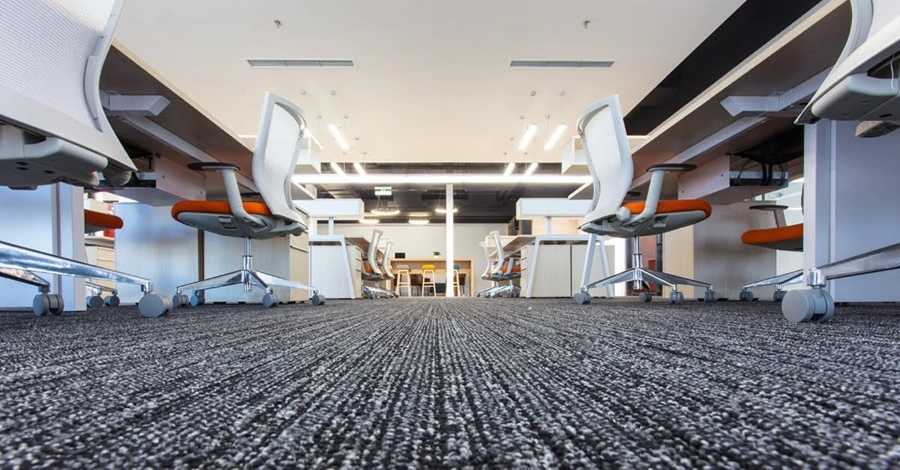
Industrial carpet is built for environments where standard flooring can’t keep up. But not all industrial carpet is the same. The right choice depends on your space, your traffic levels, and your budget.
This guide breaks down the most common types so you can pick the right one with confidence. At Pacific Modular, we’ve spent over 30 years helping businesses get this decision right.
Let’s jump right in.
What Makes Industrial Carpet Different?
Residential carpet is designed for comfort. Industrial carpet flooring is designed for performance.
Commercial and industrial spaces deal with heavy foot traffic, rolling equipment, spills, and strict fire safety codes. Standard carpet breaks down fast under those conditions.
That’s why industrial carpet is built with tighter fiber construction, higher density backing, and materials rated for thousands of steps per day. It also meets fire-resistance standards that most residential options never need to meet. The result is flooring that holds up under real-world commercial pressure while staying safe and functional.
Common Industrial Carpet Types
Not every space needs the same carpet. Here are the three industrial carpet types that cover the majority of commercial and industrial projects.
1. Carpet Tiles (Modular Carpet)
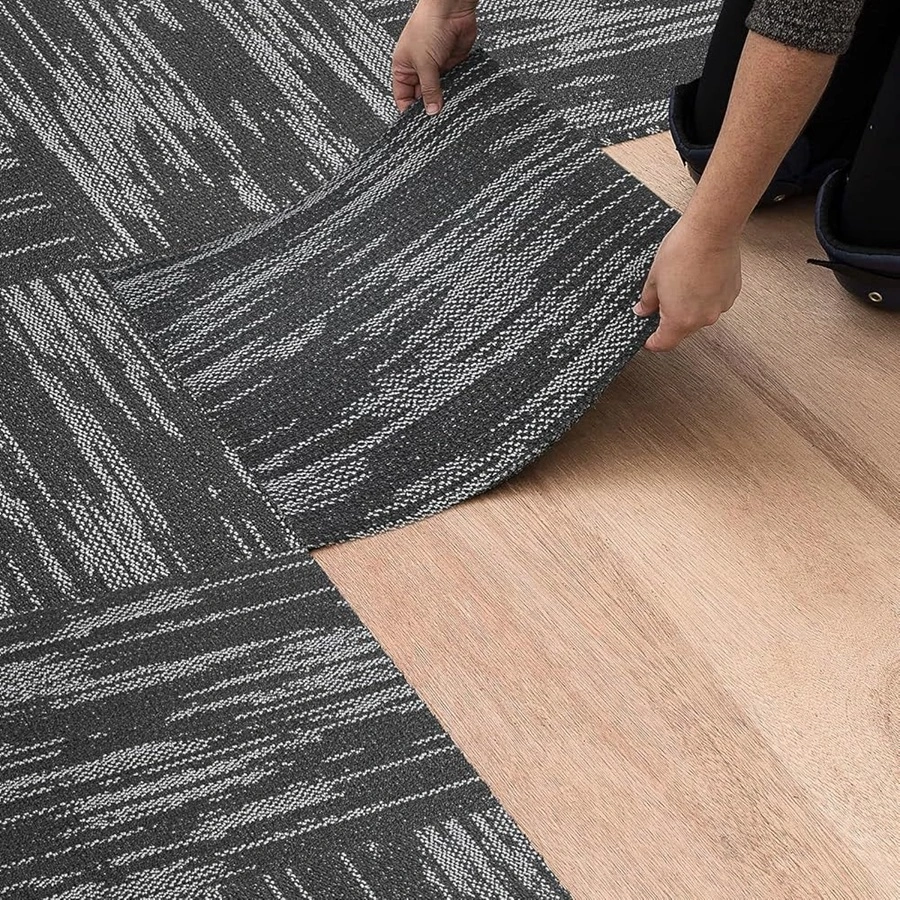
Carpet tiles are pre-cut squares, typically 18 or 24 inches, installed in a grid pattern. They are one of the most popular industrial flooring solutions for modern commercial spaces.
Why businesses choose them:
- Easy replacement. If one tile gets damaged or stained, you swap that single tile instead of replacing the whole floor.
- Design flexibility. Mix colors and patterns to create custom layouts or wayfinding paths.
- Minimal downtime. Installation is fast, and sections can be replaced without closing off large areas.
Best for: offices, retail spaces, healthcare corridors, and any space where quick repairs matter.
Broadloom Carpet
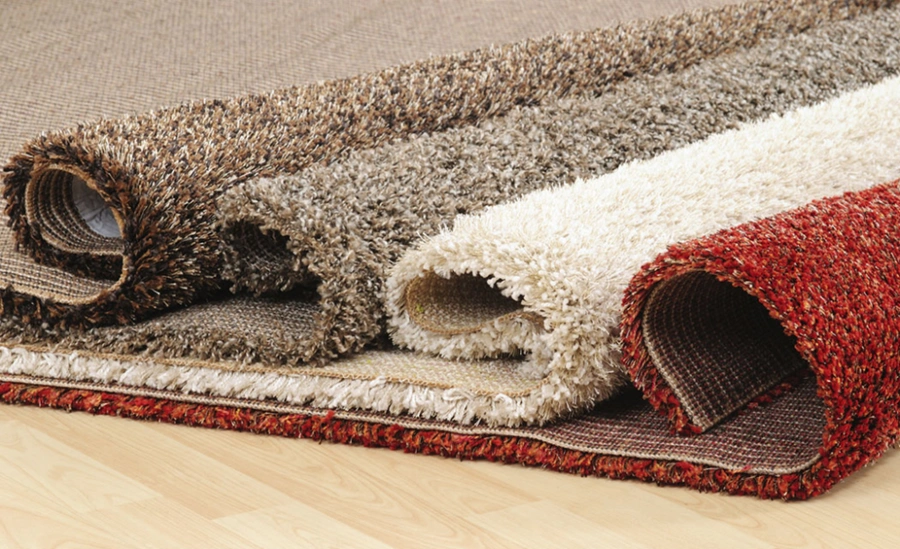
Broadloom is traditional wall-to-wall carpet installed from large rolls, usually 12 feet wide. It delivers a seamless look that works well in bigger open areas.
Why businesses choose it:
- Seamless appearance. No visible grid lines or tile edges across the floor.
- Cost-effective at scale. For large open rooms, broadloom often costs less per square foot than tiles.
- Wide selection. Available in a broad range of colors, textures, and pile heights.
Best for: conference rooms, hotel lobbies, banquet halls, and large commercial spaces where appearance is a priority.
Needle-Punch Carpet
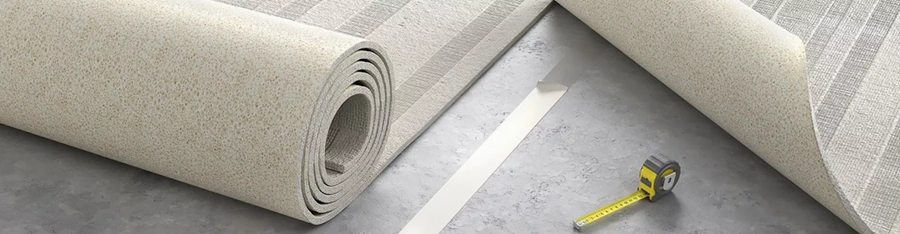
Needle-punch carpet is made by interlocking fibers through a mechanical needling process. This creates a flat, dense surface built to take serious punishment.
Why businesses choose it:
- Extreme durability. Handles heavy foot traffic and rolling loads without breaking down.
- Moisture resistance. Performs well in spaces where spills or humidity are common.
- Low maintenance. Easy to clean and does not require frequent deep treatments.
Best for: warehouses, manufacturing floors, event centers, and industrial facilities where function matters more than appearance.
If you need help matching the right industrial carpet types to your specific project, Pacific Modular’s commercial flooring team can walk you through the options.
How to Choose the Right Industrial Carpet
Knowing the types is step one. Picking the right one comes down to these five factors:
- Foot traffic volume. High-traffic areas like hallways and lobbies need carpet tiles or needle-punch. Lower-traffic conference rooms can handle broadloom.
- Moisture exposure. Spaces near loading docks, kitchens, or entryways need moisture-resistant options like needle-punch.
- Maintenance capacity. If your team can’t commit to regular deep cleaning, go with carpet tiles or needle-punch for easier upkeep.
- Budget. Consider the total cost of ownership, not just the install price. Carpet tiles cost more upfront but save money on repairs over time.
- Aesthetics. Lobbies and client-facing areas benefit from Broadloom’s seamless look. Back-of-house spaces prioritize durability over design.
Match your environment to the right type, and your industrial carpet flooring will perform for years instead of becoming a recurring expense.
Frequently Asked Questions
What is the best carpet for high-traffic commercial areas?
Carpet tiles and needle-punch carpet handle heavy foot traffic best. Carpet tiles offer easy replacement, while needle-punch provides maximum durability for the toughest industrial carpet environments.
Are carpet tiles better than broadloom for offices?
It depends on the layout. Carpet tiles work better in modular office spaces where sections may need individual replacement. Broadloom is a stronger choice for large, open floor plans where a seamless look matters.
How long does industrial carpet last?
Most industrial carpet flooring lasts between 10 and 15 years with proper maintenance. High-quality needle-punch carpet in lower-traffic areas can push past that range.
What factors affect industrial carpet cost?
Material type, pile density, fire rating, and installation complexity all play a role. Understanding how to choose industrial carpet that fits your budget starts with knowing which of these factors matter most for your specific space.
Ready to Find the Right Industrial Carpet?
Choosing the right industrial carpet doesn’t have to be complicated. It starts with understanding your space, your traffic, and your priorities.
Pacific Modular has over 30 years of experience helping businesses across the Pacific Northwest find industrial flooring solutions that perform and last. Whether you need carpet tiles for a busy office or needle-punch for a warehouse floor, our team can guide you to the right fit.Get in touch with our team to talk through your project.