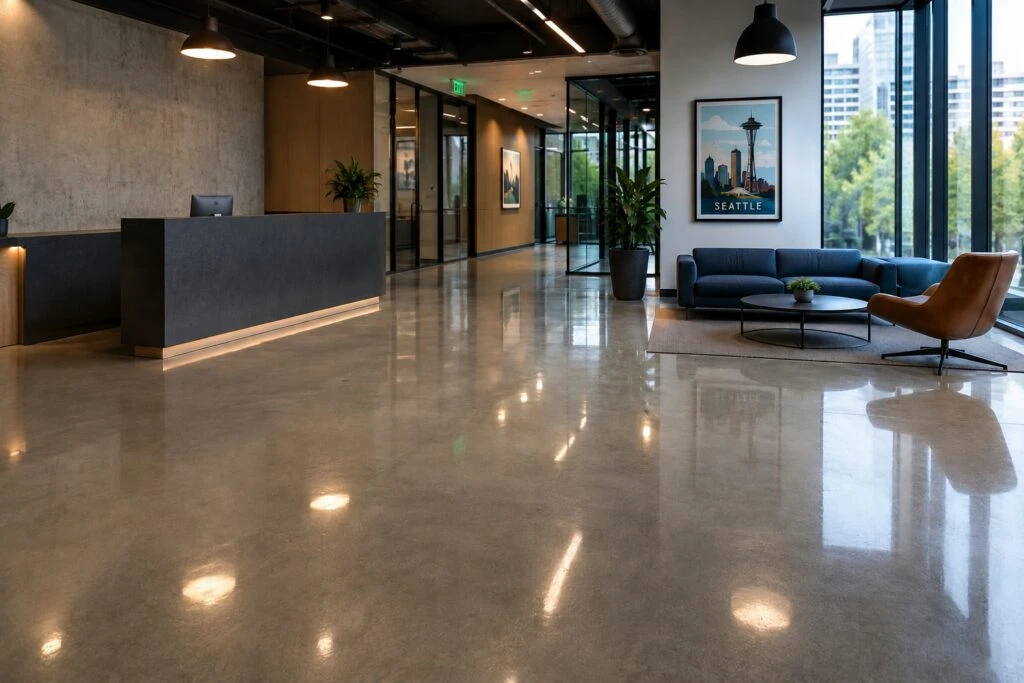
Low-Maintenance Commercial Flooring for 2026
Nothing eats a cleaning budget like floor care. Strip cycles, chemicals, labor hours, all of it. Pick the wrong floor, and that number gets worse every year.
The good news is that low-maintenance commercial flooring has come a long way. Modern vinyl, polished concrete, and modular carpet can cut your cleaning labor in half without sacrificing the look. In Portland and Seattle, the right pick also has to handle a wet winter and the salt and grit that comes with it.
Quick note first. Low maintenance means the daily routine gets cheaper, not that the floor takes care of itself. Every option below still needs professional care on a cycle. This guide breaks down the four commercial flooring low-maintenance options we install most often.
Why Low-Maintenance Commercial Flooring is a Business Necessity
Janitorial labor isn’t getting cheaper. Neither are commercial cleaning chemicals. Most facility budgets have been creeping up for years, and floor care is the biggest line inside that creep.
Here’s the math nobody puts in the proposal. The product itself is roughly 20 percent of what a floor costs you over 10 years. Maintenance is the other 80. A “cheap” floor that needs stripping and waxing twice a year becomes the most expensive one in the building.
For most offices and retail, the best low-maintenance commercial flooring is LVT or polished concrete. For lobbies that need warmth and quiet, modular carpet tile. For gyms and healthcare back-of-house, rubber.
Also explore more: Why Does Commercial Flooring Fail?
Top 4 Easy Maintenance Commercial Flooring Options
Here are the four products we recommend most often when maintenance cost is the deciding factor.
1. Luxury Vinyl Tile (LVT) and Plank
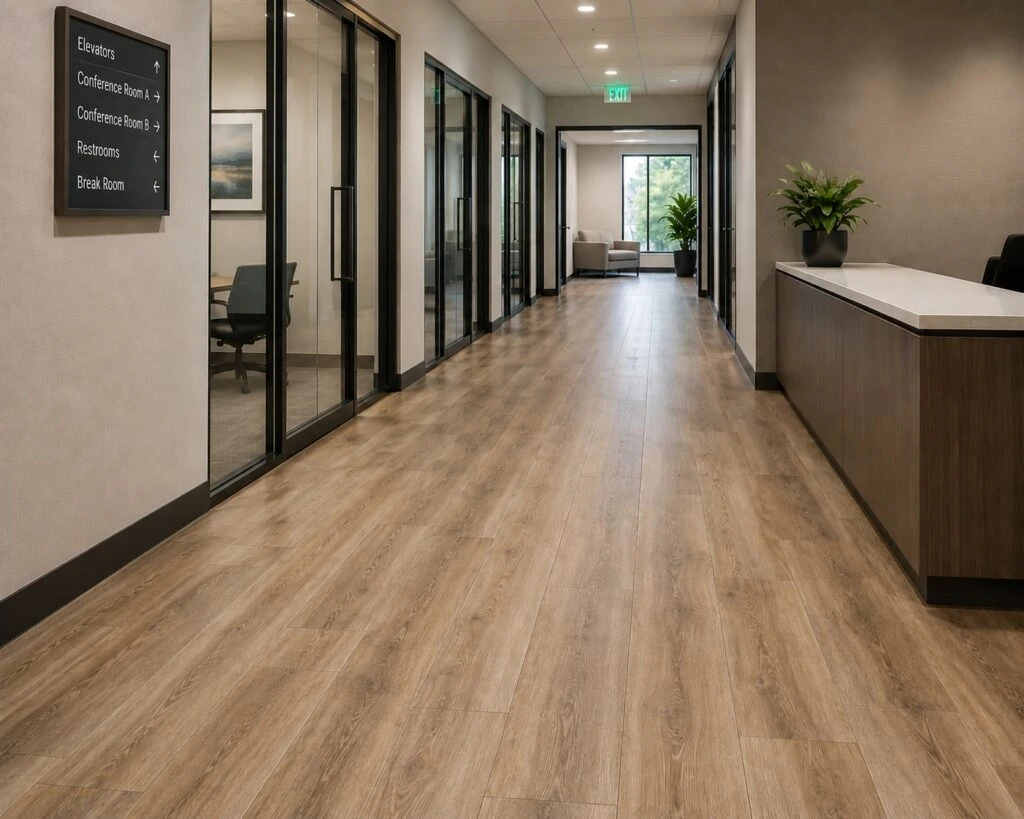
The real maintenance win with LVT is the wear layer. Commercial-grade LVT runs 20 to 40 mil, which protects against scratches, scuffs, and stains. Best part? There’s no stripping or waxing required. A damp mop with a neutral cleaner is the whole routine.
That’s why LVT is the default pick for offices, healthcare, and retail across the region. Traffic lanes still dull over time though. A professional deep clean and finish restoration every year or two brings the look back for far less than replacement.
Keep in mind that LVT isn’t your answer for forklift traffic or rolling pallet jacks. Step up to polished concrete or heavy-duty epoxy for that.
2. Polished Concrete and Epoxy Coatings
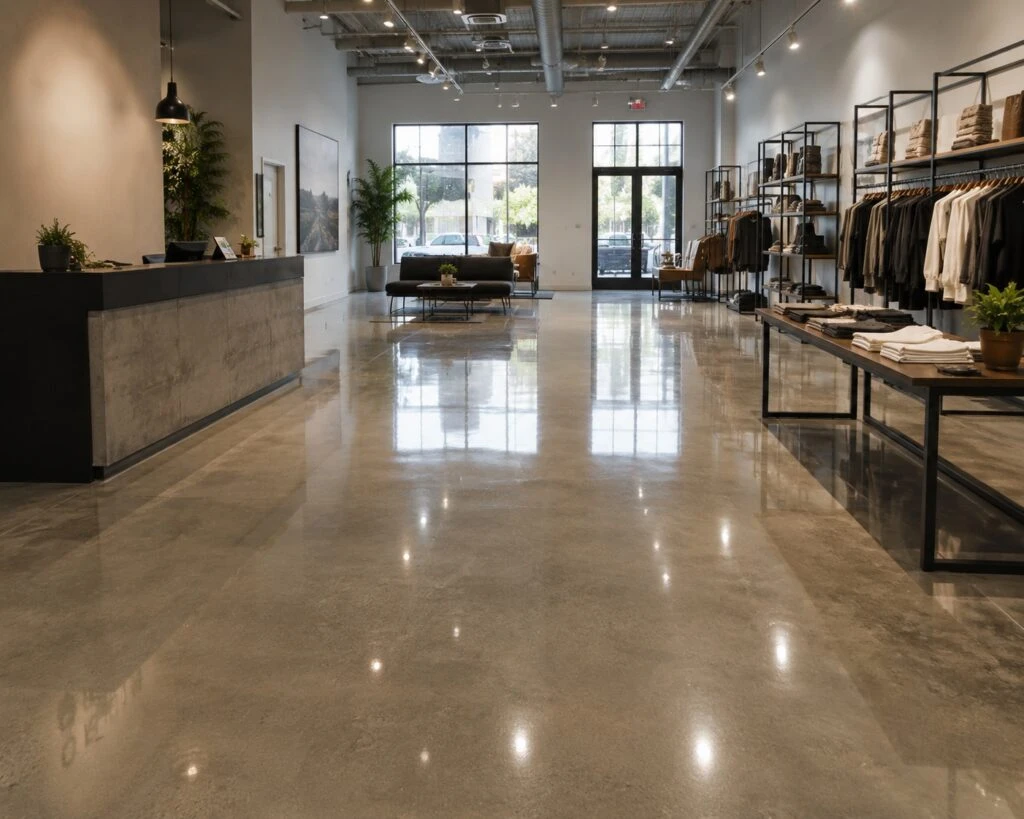
Polished concrete has the lightest daily routine here. Dust mop, autoscrubber with a neutral cleaner, and that’s basically it.
But concrete is porous. Coffee, citrus, and oil stain it. Acid etches it, and an etch is surface damage, so scrubbing won’t fix it.
The stain protection is a penetrating guard applied at install. It wears off in traffic lanes and needs reapplying every one to three years, along with a reburnish. Repairs cost real money too. Patches are hard to blend, so fixing one bad spot often means repolishing the whole room.
Also worth checking. Many floors sold as polished concrete are actually coated concrete, and those do need stripping and recoating on a cycle. Ask which one you have.
Epoxy is the heavier-duty cousin for labs and industrial space. It chips at edges and needs a recoat every five to ten years. And concrete is cold and loud, so plan acoustic mats where staff stand all day.
3. High-Performance Modular Carpet Tiles
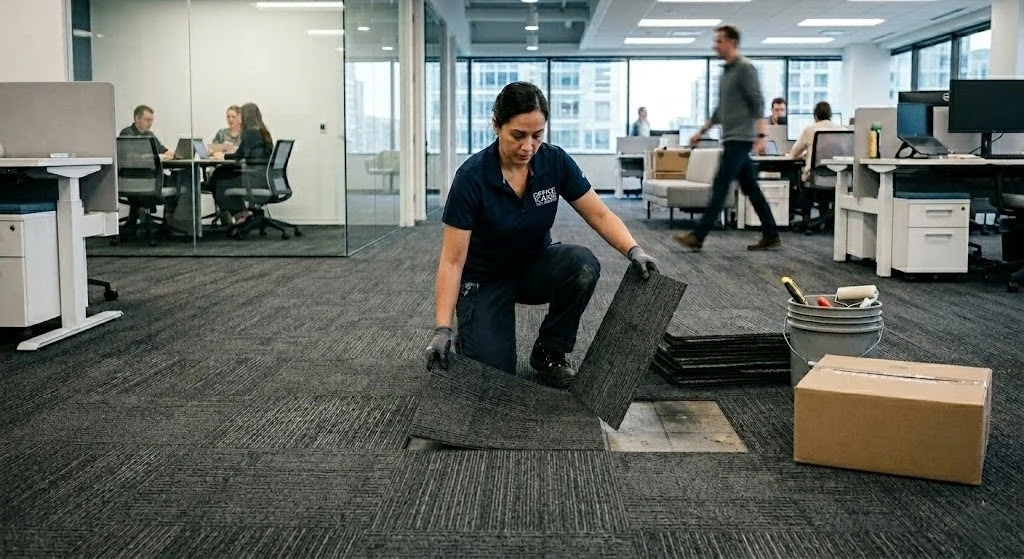
Most articles get carpet tile wrong. The pitch is “easy to clean.” The real value is modular replacement. A coffee spill on tile 47 means you pull tile 47 and drop in a spare. The other 600 never get touched.
But here’s the thing, a tile swap won’t fix the soil that gets ground deep into your traffic lanes. Vacuuming only pulls what’s near the surface, so the packed-in dirt needs a scheduled dry extraction to come out.
Now the pushback. Bargain-bin carpet tile crushes inside 18 months, and you replace it twice. Spend on higher-gauge solution-dyed nylon and the math works for years. Keep 5 to 10 percent overage from the install as replacement stock.
4. Rubber Flooring
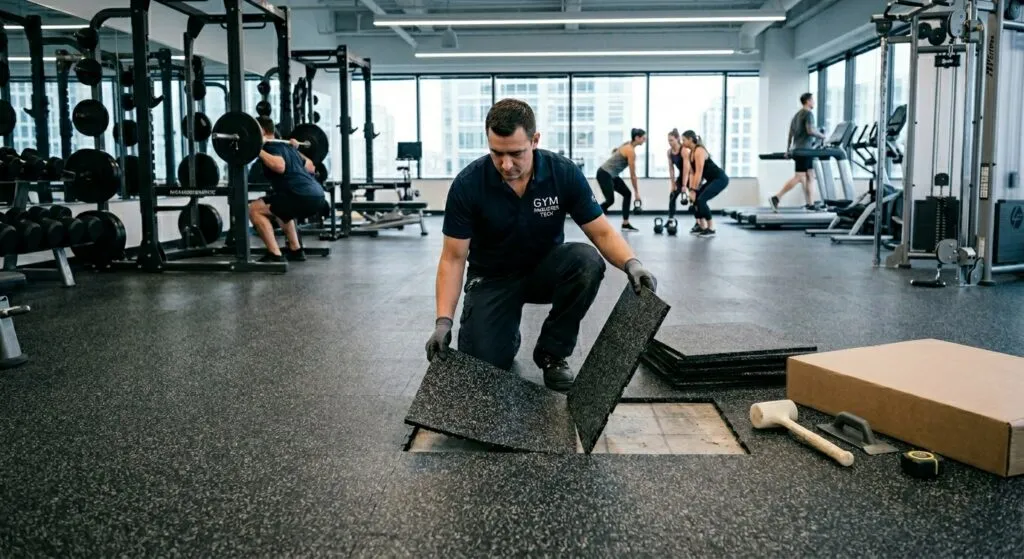
Rubber earns its spot where slip resistance and impact absorption matter more than looks. Gyms, healthcare back-of-house, daycares.
The surface is dense and non-porous, so it handles damp rooms without swelling or holding mildew. Day to day, it’s a damp mop with a neutral cleaner. What it can’t take is the wrong chemical. Vinegar, bleach, and solvents dry rubber out until it chalks and cracks, and a steam mop’s heat will curl it.
Two hard limits worth knowing. Keep rubber away from oil and grease, which soften and swell it. That rules it out for commercial kitchens. And never let anyone wax it. Most manufacturers say no finish, and stripping it back off is slow, expensive work.
Maintaining Your Floor in the Portland and Seattle Climate
Concrete slabs in this region hold and release moisture long after they look dry. A glue-down install over an untested slab is rolling the dice on a one-year failure. A relative humidity probe reading before installation catches the most expensive failure mode in commercial flooring Seattle and commercial flooring Portland jobs before it starts.
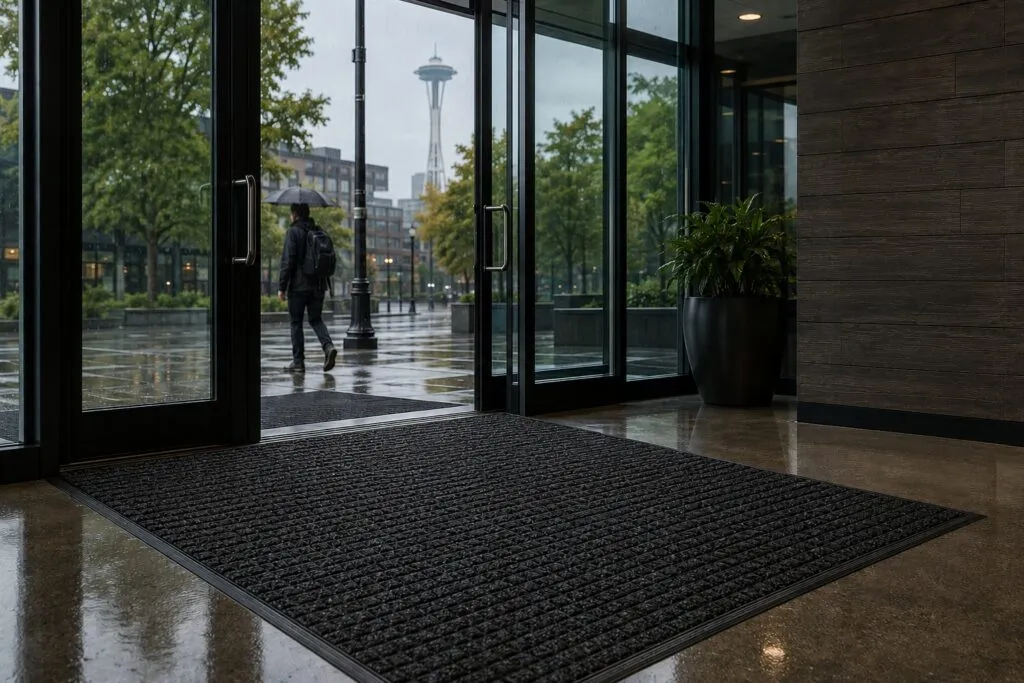
Walk-off mats are the cheapest fix in the building. A proper three-stage entry system captures up to 80 percent of dirt and moisture before it reaches your floor.
We see this pattern across Seattle and Portland buildings. A two-year-old LVT lobby shows dull traffic lanes straight down the middle because the entry mat is undersized. The fix is 12 to 15 feet of mat coverage, enough for 4 to 6 footfalls per shoe, not a single 4-foot mat at the door.
Frequently Asked Questions
What is the best low-maintenance commercial flooring for offices?
LVT is the best low-maintenance commercial flooring for most office and retail spaces. It ties polished concrete on lifecycle cost and beats it on comfort underfoot.
What is the cheapest commercial flooring to maintain?
LVT and polished concrete tie for the lowest lifecycle maintenance cost in most offices. Polished concrete wins outright for industrial buildings.
Does low-maintenance flooring mean no maintenance?
No. It means damp-mop simple instead of strip-and-wax intensive. Every floor needs a routine, and proper restoration usually beats premature replacement.
How often should commercial vinyl floors be deep-cleaned?
Two to four times a year for most offices. Up to six for heavy-traffic retail or healthcare.
Are carpet tiles actually low-maintenance?
Yes, if you stock replacements. Modular design means a stained tile gets swapped in minutes instead of triggering a full-room cleaning event.
Investing in Long-Lasting Commercial Flooring Solutions
If your cleaning budget keeps creeping up and your floors still look tired by spring, the floor is the problem. The right durable commercial flooring solutions can cut annual maintenance labor in half.
Pacific Modular has installed and restored commercial floors across the Pacific Northwest for over 30 years. Whether you need commercial flooring Seattle teams trust or commercial flooring Portland buildings can count on, the team is local. Book a low-maintenance flooring audit, and we’ll tell you what to switch, restore, and leave alone.